

If your business deals with international trade and imports, getting customs documentation right isn't optional. And the Bill of Entry (BOE) sits right at the center of it. Importers, customs agents, logistics professionals, anyone in that chain needs to know what a Bill of Entry actually is and how it works. Once import volumes start climbing, Bill of Entry data extraction becomes the practical way to handle large datasets without drowning in manual work.
Here's what BOE data extraction is, why it matters, and how automation tools are reshaping customs and trade operations.
What Is a Bill of Entry (BOE)?
A Bill of Entry is the legal document an importer or customs clearing agent files with customs authorities whenever goods come into a country. It spells out the details of what's being imported, and customs officials use it to work out the duties and taxes owed.
Nothing clears customs without it. The BOE has to be filed before goods can be released, whether they're headed for domestic use or into a warehouse.
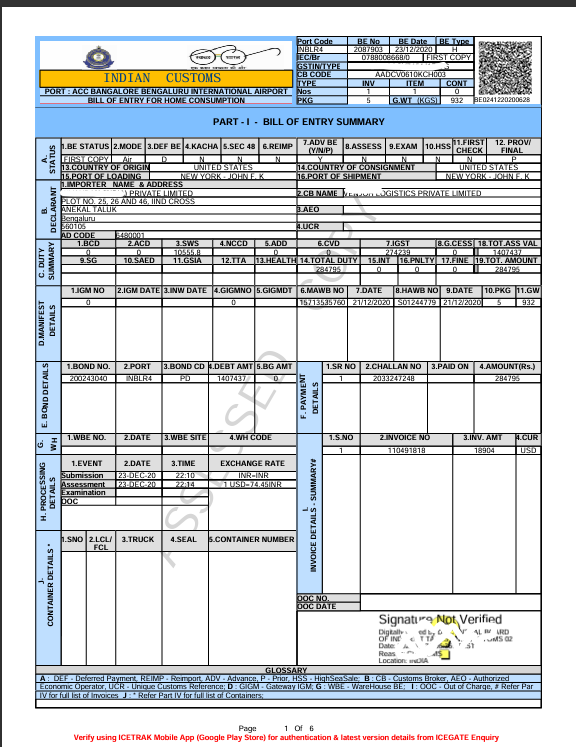
Bill of Entry sample image
Purpose of Bill of Entry
The primary purposes of a Bill of Entry include:
- Declaring imported goods to customs authorities
- Assessing customs duty and applicable taxes
- Ensuring compliance with import regulations
- Maintaining official records of imports
Without a properly filed Bill of Entry, imported goods cannot be legally cleared.
Information Contained in a Bill of Entry in India
A Bill of Entry typically includes the following details:
- Importer and exporter name
- Bill of lading or airway bill number
- Description of goods
- HS (Harmonized System) code
- Quantity and value of goods
- Country of origin
- Port of import
- Customs duty, IGST, and other charges
These details help customs authorities verify and assess the shipment accurately.
Types of Bill of Entry in India
There are different types of Bills of Entry depending on the purpose of import.
1. Bill of Entry for Home Consumption
This type of BOE is filed when imported goods are meant for immediate use or sale within the country after customs clearance.
2. Bill of Entry for Warehousing
This type of BOE is used when goods are imported and stored in a bonded warehouse without immediate payment of customs duty.
3. Ex-Bond Bill of Entry
This type of BOE is filed when goods are removed from a bonded warehouse for home consumption after payment of applicable duties.
Format of Bill of Entry in India
The format of a Bill of Entry is prescribed by customs authorities and may vary slightly by country. However, it generally includes:
- Importer details
- Shipment and transport details
- Goods description and classification
- Valuation and duty calculation
- Declaration and signature
Today, most countries allow electronic filing of Bills of Entry through customs portals.
Why Is the Bill of Entry Important In Shipping?
The Bill of Entry plays a crucial role in import operations for several reasons:
- Acts as legal proof of import
- Enables duty calculation and tax assessment
- Helps maintain compliance with customs laws
- Required for audits and financial records
- Supports trade and import data analysis
Accurate Bill of Entry data is critical for avoiding penalties and delays.
Who Files Bill of Entry?
A Bill of Entry can be filed by:
- The importer
- An authorized customs house agent (CHA)
- A logistics or freight forwarding company on behalf of the importer
The responsibility for accuracy remains with the importer.
Procedure for Filing a Bill of Entry in India
1. Electronic Filing Through ICEGATE Portal
Bill of Entry is filed electronically through the ICEGATE (Indian Customs Electronic Gateway) portal. This online system is developed by Indian Customs to facilitate paperless trade and simplify import procedures.
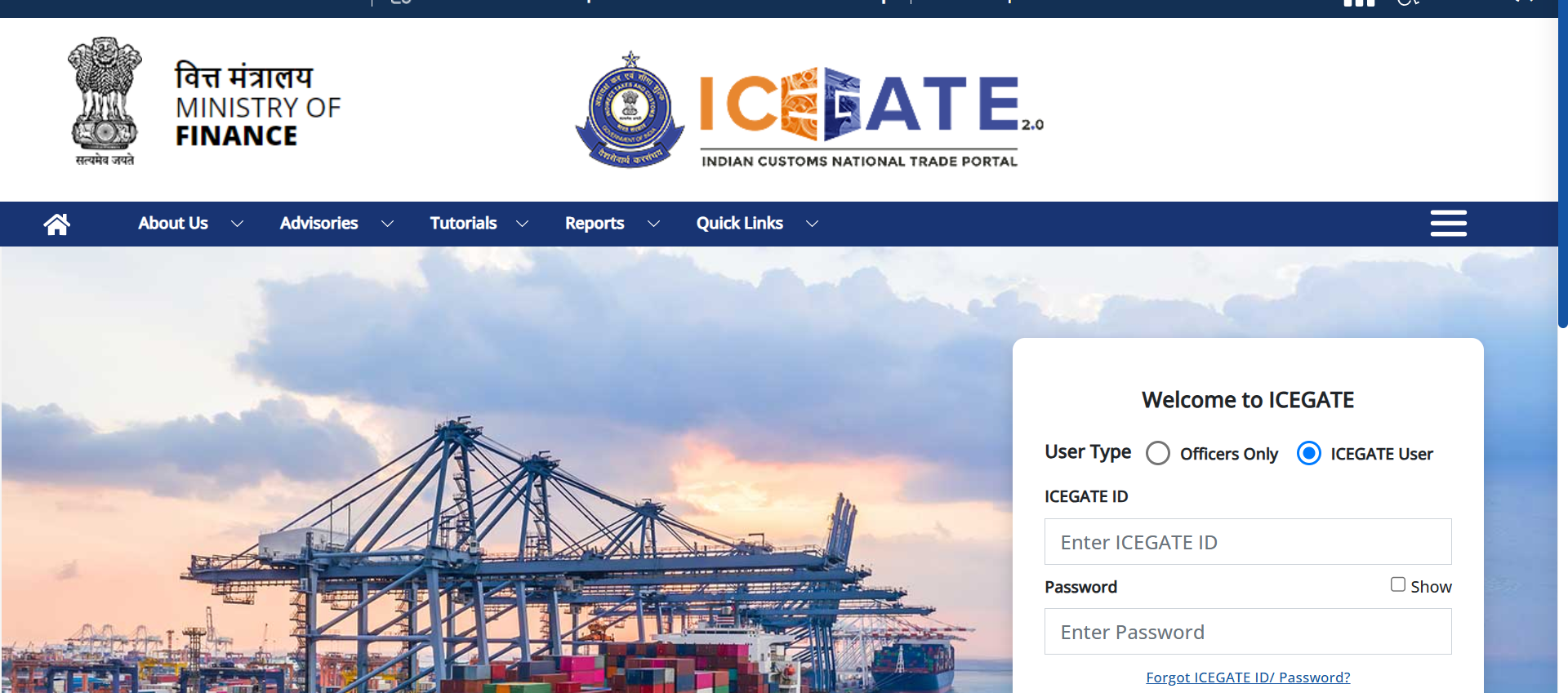
The Bill of Entry is filed by the importer or an authorized Customs Broker by submitting the required information and documents online. Importers can also track the Bill of Entry status through the ICEGATE portal.
2. Documents Required for Filing a Bill of Entry
The following documents are commonly required:
- Commercial Invoice: Issued by the exporter, detailing the value and description of goods
- Packing List: Provides information on quantity, weight, and packaging
- Bill of Lading / Airway Bill: Proof of shipment and transportation
- Import License: Required for restricted or regulated goods, if applicable
- Country of Origin Certificate (COO): Required to claim preferential duty benefits
Additional documents may be required based on applicable regulations, Free Trade Agreements (FTA), or GST requirements.
3. Customs Processing and Verification
After the Bill of Entry is filed, Customs authorities examine the submission to verify:
- Classification of goods
- Declared value
- Applicable customs duties and taxes
In certain cases, such as high-value consignments or suspected misclassification, Customs may conduct a physical examination of the goods.
4. Payment of Customs Duties
Once assessment is completed, the applicable customs duties and taxes are determined. The importer must pay these charges to proceed with clearance.
Payments can be made electronically through the ICEGATE portal or at designated Customs payment facilities.
5. Clearance and Release of Goods
After duty payment and completion of all mandatory checks, Customs issues an Out of Charge (OOC) order. This indicates that the goods have been cleared and may be released to the importer.
6. Post-Clearance Documentation
The Bill of Entry is an important legal document and should be retained by the importer for:
- Claiming GST refunds and Input Tax Credit (ITC)
- Applying for duty drawback benefits
- Supporting future Customs audits and compliance
Documents such as the Bill of Entry status, Importer Exporter Code (IEC), and GST details may be required for audits.
To Extract the Bill of Entry & Shipping bill data 👉 Book A Free Demo or Connect on 👉 WhatsApp
Legal Provisions Related to the Bill of Entry In India
Section 46 of the Customs Act, 1962
As per the Section 46 of the Customs Act, 1962 it is mandatory for any importer to file of Bill of entry, it also specifies the process and timeline for submission.
Customs (Import of Goods at Concessional Rate of Duty) Rules, 2017
Provides concessional duty benefits on specified goods, subject to compliance through proper filing of the Bill of Entry.
Customs (Electronic Declaration of Imported Goods) Regulations, 2018
Governs the electronic filing of Bills of Entry and promotes paperless customs processing.
Bill of Entry in the Digital Era In India
Most customs authorities now accept electronic Bills of Entry. Businesses have a challenge of verifying the large data set so that’s why they often use data extraction and automation tools to manage Bill of Entry data efficiently, especially when handling large volumes of import transactions.
Some solution providers, including companies like SEPFUST Solutions, offer tools that help extract and organize Bill of Entry data for compliance and reporting purposes.
Conclusion
The bill of entry is an important document in the import process. It ensures legal compliance, accurate assessment of duty, and smooth custom clearance. Understanding what is Bill of Entry and how it functions will help importers to manage their trade operations more effectively.
Since a bill of entry is a long and complex document, maintaining the records and verifying the large data set manually will be a hectic job, in this SEPFUST’s Bill of Entry Data Extraction tool will help you.
FAQs
1. What is a Bill of Entry used for?
A Bill of Entry is used to declare imported goods to customs and assess applicable duties and taxes.
2. Is Bill of Entry mandatory for imports?
Yes, filing a Bill of Entry is mandatory for customs clearance of imported goods.
3. Who issues a Bill of Entry?
A Bill of Entry is filed by the importer or their authorized agent with customs authorities.
4. What happens if Bill of Entry is not filed?
Goods cannot be cleared from customs, and penalties may apply.
5. Is Bill of Entry filed online in India?
In most countries, Bills of Entry are filed electronically through customs portals.
SEPFUST Solutions helps businesses manage Bill of Entry data more efficiently through automated extraction and structured data handling. By reducing manual effort and improving accuracy, it supports faster compliance reporting, easier GST ITC claims, audit readiness, and better visibility into import and customs documentation.

Rishi Raj
Rishi Raj is a marketing professional with strong domain expertise in Finance and Technology, bringing over 3+ years of experience in driving growth-led marketing initiatives. He has a proven track record in building scalable go-to-market strategies, demand generation, and positioning technology products for measurable business impact.