

In today’s era enterprises are going digital first, SAP system also giving them an advantage by not working in isolation. In enterprises operation required seamless communication with third-party applications, cloud platforms, legacy systems, and external partners. This is where SAP ABAP Integration plays a crucial role.
ABAP (Advanced Business Application Programming) is the backbone of SAP customization and integration, this enables the businesses to extend SAP functionality and connect it with other systems efficiently. In this blog we will be exploring how SAP ABAP integration works and industry use cases. It will also cover how SEPFUST Solutions can help in the integration.
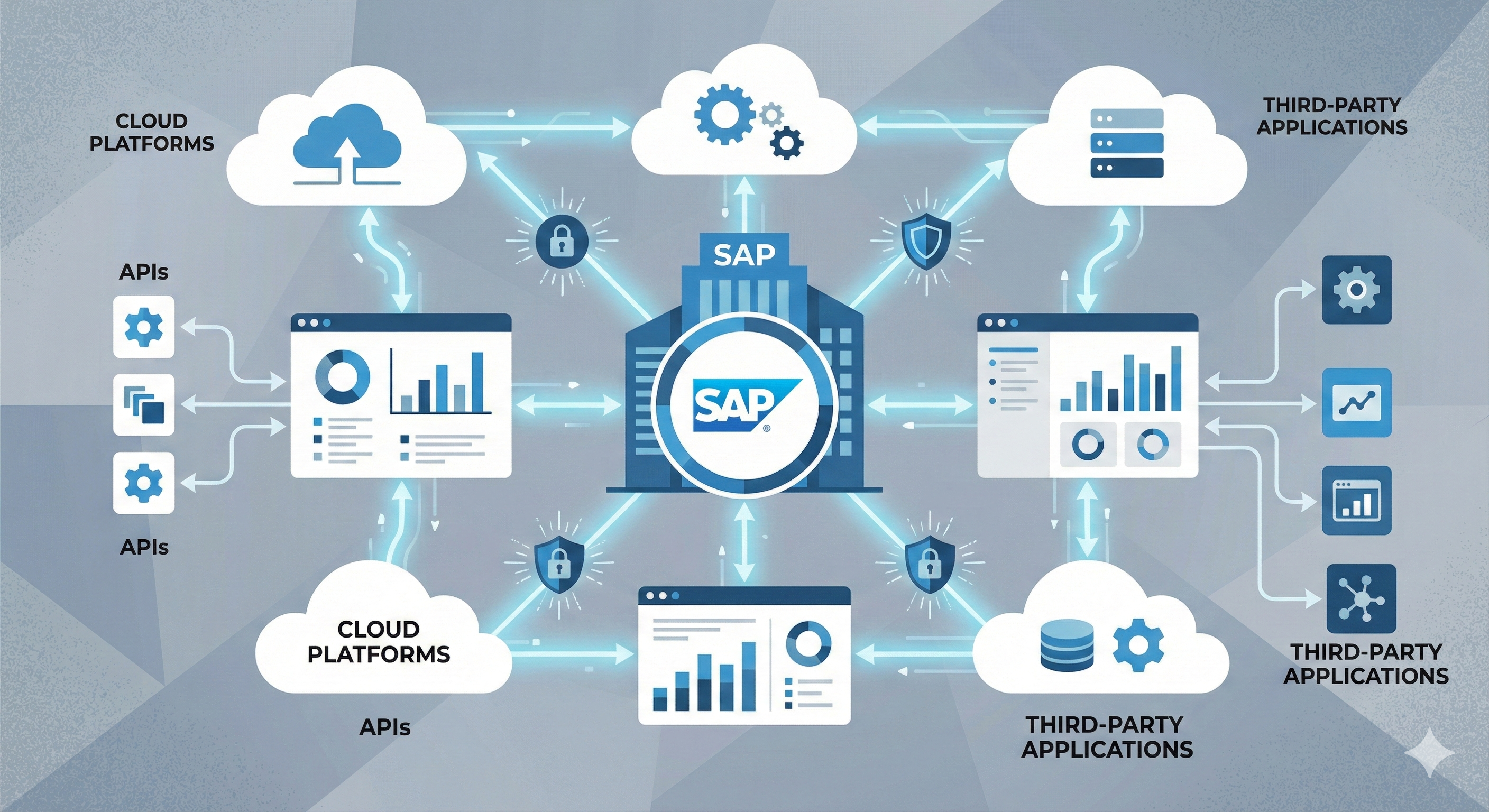
In SAP ABAP, integration refers to connecting SAP systems with external applications, databases, or third-party tools to enable seamless data exchange.
It ensures real-time data flow, process consistency, and compliance across systems using APIs, IDocs, RFCs, and web services within a controlled, auditable architecture.
What Is SAP ABAP Integration?
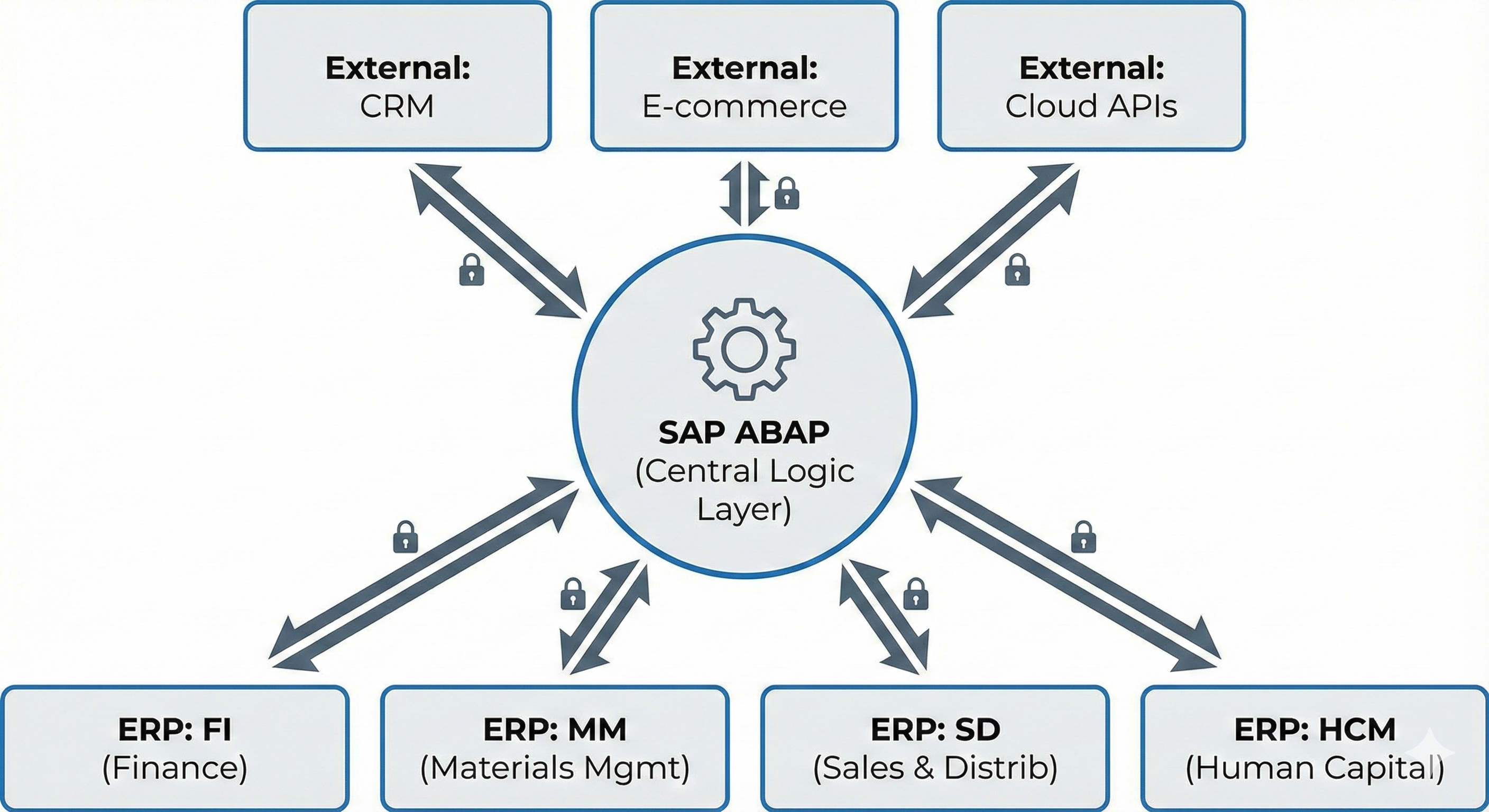
SAP ABAP Integration is the process of connecting SAP systems with internal or external applications using ABAP based programs, interfaces, and SAP integration technologies.
These integrations allow data to flow smoothly between systems such as:
- ERP and CRM platforms
- E-commerce applications
- Banking and payment gateways
- Supply chain and logistics systems
- Cloud platforms and APIs
ABAP acts as the logic layer that processes, transforms, validates, and transfers data securely within and beyond SAP landscapes.
How SAP ABAP Integration Works
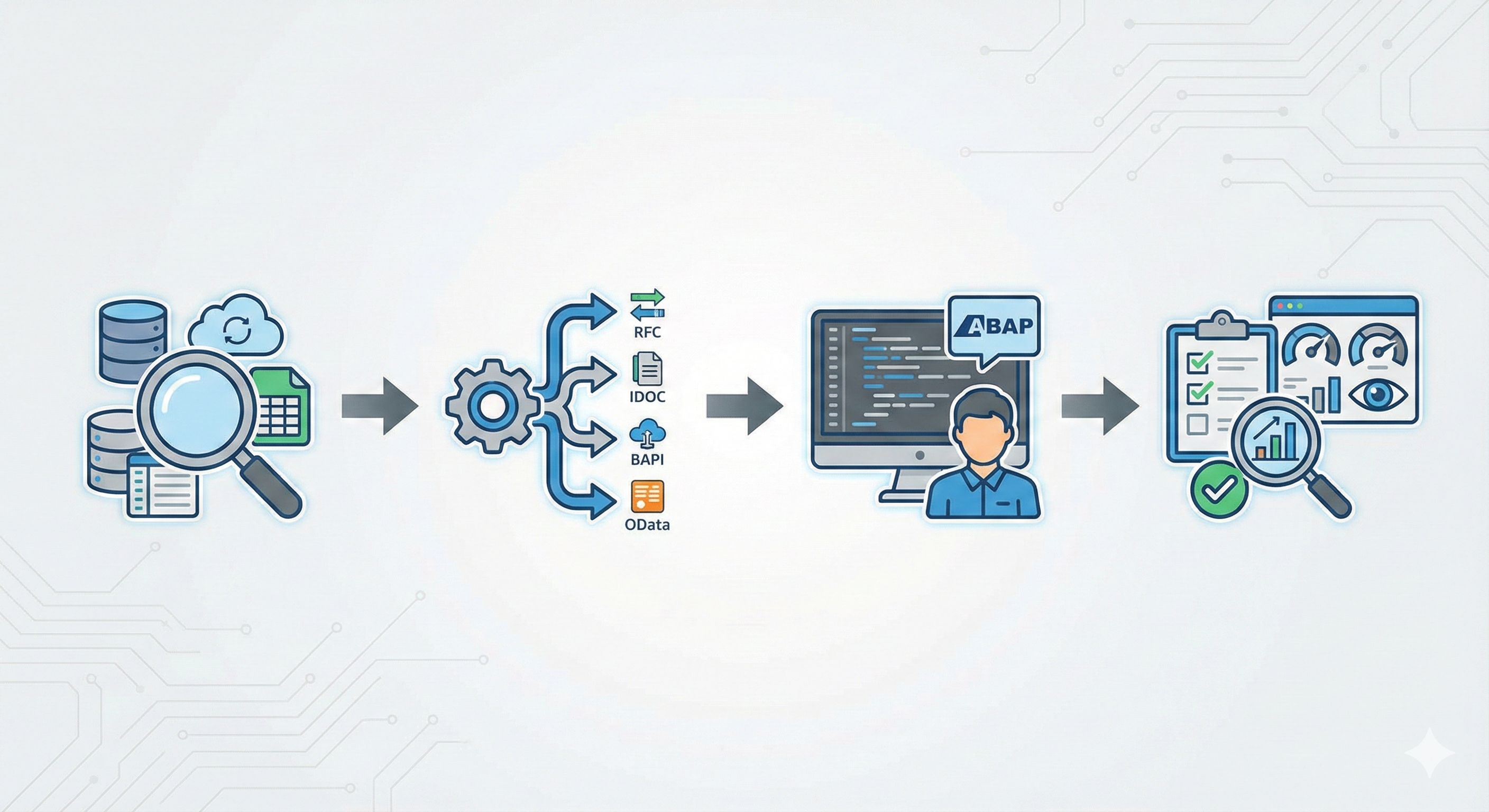
SAP ABAP integration typically follows a structured approach:
1. Data Source Identification
The first step is identifying where the data originates and where it needs to go, SAP modules (FI, MM, SD, HCM), external systems, or cloud platforms.
2. Integration Method Selection
Depending on business needs, ABAP integrations may use:
- IDocs for asynchronous data exchange
- BAPIs & RFCs for real-time communication
- REST/SOAP APIs for modern web-based integrations
- File-based interfaces (CSV, XML, JSON)
- OData services for SAP Fiori and mobile apps
3. ABAP Development
Custom ABAP programs are developed to:
- Map data structures
- Validate business rules
- Handle errors and exceptions
- Log and monitor integration processes
4. Testing & Monitoring
Before going live, all integrations undergo unit testing, integration testing, and performance checks. Post-deployment monitoring tools ensure data accuracy and system stability. At SEPFUST Solutions we are using the best process available in the industry to ensure seamless integrations and help businesses to scale.
Real Industry Use Cases of SAP ABAP Integration
1. Manufacturing: Supply Chain Automation
Manufacturers use ABAP integrations to connect SAP ERP with various systems used in the whole supply chain like supplier portals, warehouse management systems, and transport systems.
- Real-time inventory updates
- Automated purchase orders
- Faster production planning
Impact: This will reduce the downtime and improve the supply chain visibility as all data sets go on the same flow. Seamless workflow will also increase the transparency in the system.
2. Retail & E-commerce: Order and Payment Integration
Most of the D2C/Ecommerce business integrate the SAP with e-commerce portals like Flipkart, Amazon, Mesho, Myntra etc and payment gateways using ABAP APIs and IDocs.
This allows:
- Automatic order creation in SAP
- Real-time payment confirmation
- Seamless invoice generation
Impact: Faster order processing and improved customer experience.
3. Banking & Finance: Secure Transaction Processing
Most of the financial institutions rely on ABAP integrations to connect SAP with core banking systems and external compliance platforms.
Key benefits include:
- Secure data exchange
- Automated reconciliation
- Regulatory compliance reporting
Impact: Reduced manual effort and enhanced data security.
4. Healthcare: Patient and Billing Systems
Healthcare organizations have various operations from OPDs to Vendor management with SAP Integration they can integrate their hospital management systems using ABAP services to manage.
- Patient billing
- Insurance claims
- Financial reporting
Impact: Improved accuracy and faster claim settlements.
5. Logistics & Transportation: Real-Time Tracking
Logistics companies use ABAP to integrate SAP with GPS and shipment tracking systems.
This enables:
- Real-time shipment status updates
- Automated billing
- Optimized delivery routes
Impact: Better transparency and reduced operational costs.
SEPFUST Solutions have so many success case studies like these.
Why SAP ABAP Integration Is Critical for Businesses
- Ensures seamless data flow across systems
- Reduces manual errors and duplicate data entry
- Improves operational efficiency and decision-making
- Supports digital transformation initiatives
- Enables scalability and future-ready architectures
How SEPFUST Can Help
Implementing SAP ABAP integrations requires deep technical expertise, industry understanding, and a structured approach. SEPFUST specializes in delivering end-to-end SAP ABAP integration solutions tailored to your business needs.
From interface design and ABAP development to testing, optimization, and ongoing support, SEPFUST helps organizations build secure, scalable, and high-performance SAP integrations across industries. Whether you’re modernizing legacy systems or connecting SAP with cloud-based platforms, SEPFUST ensures smooth and reliable integration outcomes.
Conclusion
SAP ABAP integration is not optional for businesses anymore, it is most important for businesses aiming to stay competitive in a connected ecosystem. With the right integration strategy and an experienced partner like SEPFUST, any business can unlock the full potential of their SAP systems while ensuring flexibility, efficiency and growth.
Frequently Asked Questions (FAQs)
1. What is SAP ABAP Integration?
SAP ABAP Integration refers to connecting SAP systems with internal or external applications using ABAP programs, interfaces, and integration technologies to enable secure and seamless data exchange.
2. Why is SAP ABAP Integration important for enterprises?
SAP ABAP integration helps enterprises automate processes, reduce manual errors, improve data accuracy, and enable real-time communication between SAP and third-party systems.
3. What are the common methods used in SAP ABAP Integration?
Common integration methods include IDocs, BAPIs, RFCs, REST/SOAP APIs, OData services, and file-based interfaces such as XML, JSON, and CSV.
4. Can SAP ABAP integrate with cloud platforms and modern APIs?
Yes, SAP ABAP can integrate with cloud platforms and modern applications using REST APIs, OData services, SAP PI/PO, CPI, and secure web services.
5. Which industries benefit most from SAP ABAP Integration?
Industries such as manufacturing, retail, e-commerce, banking, finance, healthcare, logistics, and transportation gain significant value from SAP ABAP integration.
6. Is SAP ABAP Integration secure?
Yes, SAP ABAP integrations are highly secure when implemented using proper authentication, authorization, encryption, and SAP security best practices.
7. How does SAP ABAP Integration improve business efficiency?
It improves efficiency by automating data flow, eliminating duplicate entries, ensuring real-time updates, and enabling faster decision-making across systems.
8. What challenges are involved in SAP ABAP Integration?
Common challenges include data mapping complexity, error handling, performance optimization, and managing integrations across multiple systems.
9. How can SEPFUST help with SAP ABAP Integration?
SEPFUST provides end-to-end SAP ABAP integration services, including interface design, ABAP development, testing, optimization, and ongoing support for secure and scalable integrations.
10. Is SAP ABAP Integration suitable for legacy system modernization?
Yes, SAP ABAP integration plays a key role in modernizing legacy systems by connecting them with SAP and cloud-based platforms without disrupting existing operations.
SEPFUST delivers end-to-end SAP ABAP integration services, enabling seamless connectivity between SAP and third-party systems. From APIs, IDocs, and OData to cloud and legacy integrations, SEPFUST ensures secure, scalable, and high-performance solutions.

Rishi Raj
Rishi Raj is a marketing professional with strong domain expertise in Finance and Technology, bringing over 3+ years of experience in driving growth-led marketing initiatives. He has a proven track record in building scalable go-to-market strategies, demand generation, and positioning technology products for measurable business impact.